

Barking

Barking is just another way dogs communicate, especially if they are having strong emotions. You can probably tell the difference in your own dog’s tone, as to whether they are happy or unhappy.
Why Dogs Bark in general
Excitement – pleased to see someone/another dog.
Play: to initiate play, over excitement, or even frustration.
Alarm - Sudden noises or movement.
Fear - Unknown dogs or people near the house or on walks, vehicles, or even certain events or circumstances they don’t understand or worries them.
Boredom – requiring attention or mental stimulation.
Loneliness - distress at being left.
Breed - some dogs have been specifically bred to bark, such as guardian or hunting/flushing breeds.
If your dog has started to bark more recently, this could be related to a medical problem: Joint pain or an older dog becoming confused can cause them to bark more and you should visit your vet for advice.
How to Help Stop Excessive Barking
Barking is often a form of shouting for a dog to get their message over loud and clear!
The first step is to identify when, where, who, what, makes your dog bark.

Excitement – Training for humans, keep your greetings low energy and ask any visitors to act the same. You can given attention when your dog is showing calmer behaviour.
Do not let your dog greet other dogs when over excited. Walk dogs some distance
apart, on a parallel and only lessen the space between them when they are calmer.
Play–teach impulse control - https://www.politepoochesessex.co.uk/post/impulse-control-teaching-calm-behaviour

Alarm – offer desensitisation support.
Record the sound that triggers a reaction, then when your dog is calm and positively
distracted play the sounds, quietly at first, making sure you reward if they don’t bark.
Gradually, over days and weeks, as your dog can cope calmly, increase the volume.
Fear – will likely require environmental alterations, by blocking the view of windows or doors or access to what triggers your dog. Then providing reconditioning support, positive distraction and alternative behaviour training, outlined below.
If your dog is barking at other dogs, people or vehicles when out on a walk, this could be reactive behaviour and they will need extra support - https://www.politepoochesessex.co.uk/post/understanding-reactive-behaviour-in-dogs
Boredom – Make sure your dog has enough physical exercise and mental stimulation through enrichment, a tired dog will be less likely to be stimulated to bark. https://www.politepoochesessex.co.uk/post/enrichment-what-is-it-what-is-the-point

Loneliness – support with separation training; help from a dog walker, doggy daycare, friends/neighbours when dog has to be left.
Overall advice
Learn their body language – Be aware of early warning signs, such as ears pricked, staring or strong eye focus, air sniffing, pacing or restlessness. With dogs keen sense of smell, good hearing and eyesight, they can often be aware of triggers before we are. The earlier you intercept the easier it will be to control or contain barking.
Inadvertently reinforcing – it is a natural reaction to react to dogs barking, however, if you are give your dog attention when they bark, this will actually encourage the behaviour. Even if it is negative attention, like shouting at them.
Try to ignore them – stay silent, turn your body away from them and stay still, avoid eye contact, or use alternative behaviour training techniques, outlined below. This may well test your patience!
Once there is a brief lull in the barking, offer calm verbal praise or attention, you could start to introduce a treat with a key training word, such as “quiet”.
Always consider what they are trying to tell you and take steps to deal with the situation.
Try to recognise and reward when your dog does stay quiet for example, they hear something outside and don’t react – praise and/or reward, using key word.
Reduce stress - Stressed dogs are more likely to bark. https://www.politepoochesessex.co.uk/post/stress
Training - Teach alternative behaviours to barking
Use treats to make it a suitably rewarding for your dog to take notice.
Sniffing for treats on the floor, using recall, ‘go to bed’ or ‘settle’ for example, should be practiced in regular micro training session generally, when they are not barking, as they learn best when not distracted.
Once this is well established, you could then start making it more challenging by having a family member/friend knocking on the door when you are prepared with treats and not in a rush to get to the door.
If you are worried about disturbing your neighbours, it is worth having a chat with them or slipping a note through the door, the fact you are aware of the problem and working to improve the situation, should make them more tolerant.
Never Punish Your Dog
Including:
Shouting or make a loud noise
Throwing objects
Spraying water at your dog
Using anti-barking devices, such as citronella-spraying collars or shock collars
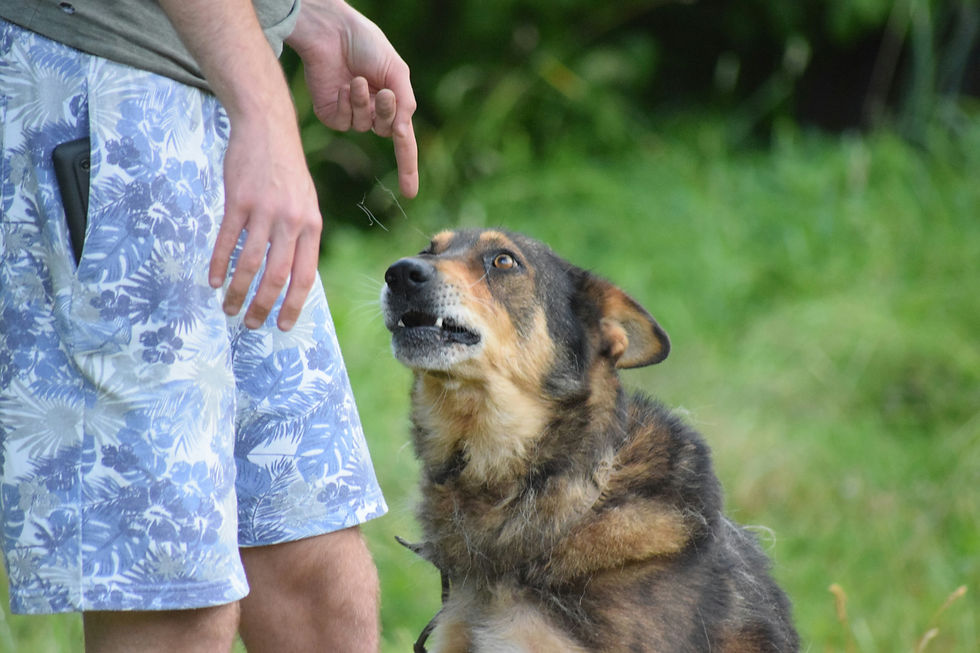
Scaring or threatening a dog may temporarily interrupt barking, but in the long run it can make the problem worse leading to higher levels of stress. They may start to display negative behaviour towards you by keeping a distance, avoiding being ‘caught’ , or even start to display defensively aggressive behaviors towards you.
Being realistic: you won’t be able to stop a dog barking completely.
If you would like any further advice or support please get in touch:
07979 44 88 49


Comments